Recently, I signed up to a spending monitoring and budgeting app for $120 a year. I did it partly out of curiosity, and partly because I wanted to test it properly before ever considering whether it might be useful for clients. What I did not expect was how quickly it pushed me into thinking more broadly about consumption, not just at a household level, but at an economy-wide level.
At the same time, I have been reading more research from fund managers about how people are spending their money now compared with even five or ten years ago. When you put the two together, a clear pattern emerges. The way we consume is changing, and that matters for how we think about investing.
For a long time, economic growth was closely tied to buying more stuff. Bigger houses, more furniture, more clothes, more gadgets. That model worked extraordinarily well for decades.
But there are signs that it is maturing. In many parts of the developed world, people already own most of what they need. Goods have also become cheaper and more durable over time. Replacing a fridge every ten years does not drive the same level of growth as buying one for the first time.
This does not mean people have stopped spending. It means they are spending differently.
One of the clearest shifts is away from goods and towards services and experiences.
We see it anecdotally with clients, and it shows up very clearly in the data. Travel is a good example.
In conversations with clients who work in the travel industry, they have noticed a change in why people travel. It used to be about going somewhere to see the place. Paris, London, New York. Now, more trips are driven by a specific experience.
A concert is a good example. Someone travels to see Taylor Swift in a particular city and then builds a trip around that event. The same thing happens with major sporting events, tennis tournaments, Formula One races, rugby and cricket tests, or the Olympics. The destination matters, but the experience is the anchor.
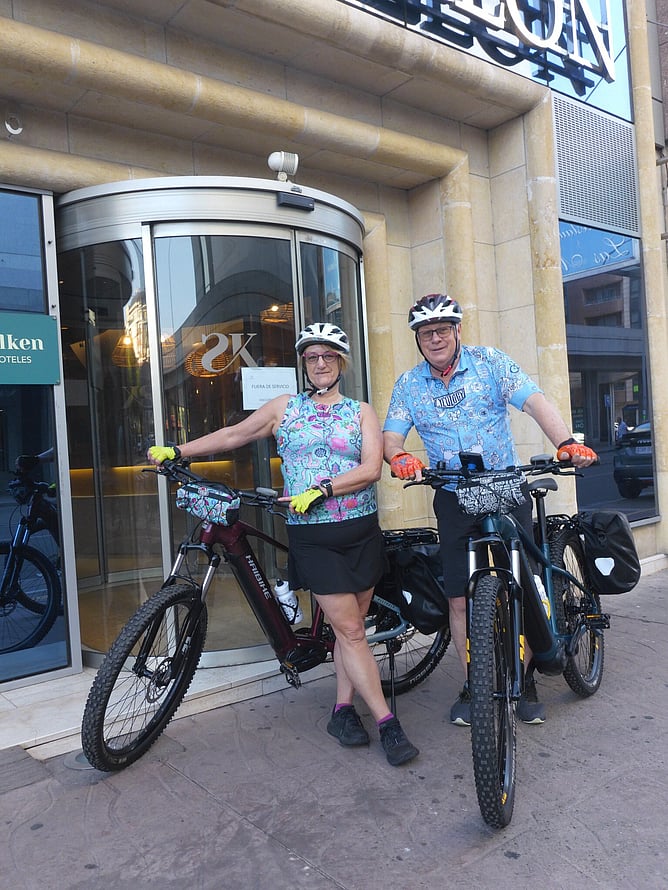
Travel itself has also become more active. Since 2006, Peter and I have tended to see the world through long-distance cycling trips, with the occasional hiking trip thrown in.
What started out as a niche way to travel has become far more mainstream. Our go-to travel agent now offers an extraordinary range of active tours, and the list keeps growing.
People are not just going somewhere. They are doing something while they are there.
This shift towards experiences is not limited to travel.
Alphinity’s research points to a broader reallocation of spending away from goods and towards activities, wellness, and lifestyle choices.
In the United States, Bank of America’s credit and debit card data shows that spending on outdoor recreation has been outperforming indoor recreation over the past six months. Camping spend was up 16 percent year on year as at July 2025, while boating was one of the weaker categories. This suggests people are seeking lower-cost, more accessible experiences that still deliver a sense of wellbeing and enjoyment.
Another fascinating indicator of this shift is something most of us never think about at all: cardboard boxes.
Boxes move goods.
When demand for boxes falls, it usually means fewer physical products are being shipped.
In the United States, box shipments per capita have fallen to their lowest level since 2016, after peaking during the pandemic. Around half of all boxes move through grocery channels, so this is not a niche signal.
It is a broad indicator that goods consumption has slowed, even while overall spending continues. That has real implications for packaging companies and for manufacturers whose growth relied on ever-increasing volumes of physical products.
At the same time as people are changing what they buy, they are also changing where they buy it.
Alphinity’s work on what they call the retail superpowers is a good illustration of this.
Amazon, Costco, and Walmart together accounted for around 45 percent of incremental US retail sales in the second quarter of 2025.
Nearly half of every new retail dollar was spent with just three companies, out of millions of retailers. Scale, logistics, and convenience matter more than ever, especially when consumers are value conscious and time poor.
This does not mean all retail is dying.
It means the middle is being squeezed.
Businesses that lack scale, a clear value proposition, or genuine expertise are finding it hard to compete. Traditional pharmacies and mid-market department stores are losing relevance, while specialist retailers with real knowledge and service, such as automotive parts suppliers, continue to do well.
Again, this reflects a consumer who is more deliberate about where they spend and what they value.
There is also a distributional element to all of this that matters.
Consumers are not one homogenous group. Alphinity’s broader commentary highlights that higher-income and older consumers tend to be more resilient.
They often benefit from higher interest rates, have accumulated assets, and can continue spending on experiences and services even when goods consumption slows. Younger or lower-income consumers, by contrast, are more sensitive to price increases and tend to trade down, shift to smaller pack sizes, or prioritise essentials.
So what does all of this mean for your investments?
First, it reinforces why we focus on understanding how companies actually make money, rather than relying on broad labels like consumer discretionary or consumer staples. Two companies can sit in the same sector and face very different futures depending on whether they are aligned with how people are really spending.
Second, it highlights the importance of scale and adaptability. Businesses that can spread costs, invest in logistics and technology, and respond quickly to changing consumer behaviour are better placed than those relying on static models. That does not automatically mean bigger is better, but it does mean competitive advantage matters.
Third, it challenges the assumption that lower goods consumption is necessarily a bad economic signal. In many cases, it reflects a more service-oriented, experience-focused economy rather than a collapse in demand. People are still spending, just not always on things that show up neatly in traditional retail statistics.
Finally, it is a reminder that long-term investing is about structural trends, not short-term noise. Consumption patterns do not change overnight, but when they do shift, they tend to keep moving in that direction for a long time. The move from goods to services, from ownership to access, and from passive consumption to active experiences has been building for years.
As investors, we do not need to chase every trend. But we do need to understand which businesses are aligned with how people actually live their lives now, rather than how they lived them twenty or thirty years ago. Paying attention to how you spend your own money is often a surprisingly good place to start.