Most people who ask me what their KiwiSaver fund actually owns are picturing shares and bonds. Companies they could look up on the stock exchange this afternoon and see a price for.
A small number of KiwiSaver funds also hold something else. A stake in a company with no listed share price at all, because it has never been listed anywhere.
What a private asset actually is
These are called private assets. In plain terms, a company that is not traded on a public exchange, and whose shares cannot be bought or sold with a few clicks.
According to the Reserve Bank of New Zealand, private assets made up about 2.4% of the total money held across all KiwiSaver funds, as at the June 2025 quarter. That share has held roughly steady for some years.
The Financial Markets Authority looked at this more closely in a report published in April 2026. It surveyed 30 fund managers who run KiwiSaver schemes, and found only 7 held any private assets at all. Even among those 7, private assets typically made up less than 10% of the fund.
Compare that with Australia, where pension funds put around 16% of their money into private assets, as at December 2023. Or the wider global picture, where private markets more than tripled between 2014 and 2024, from US$4 trillion to US$15 trillion, and are forecast to double again by 2034.
New Zealand is a long way behind that curve.
The businesses our stock exchange misses
There's a case for closing some of that gap.
New Zealand's stock exchange is small, and listing on it is expensive and heavy with compliance requirements for New Zealand sized companies. Most good New Zealand businesses never get there.
If KiwiSaver money stays entirely inside listed shares and bonds, a lot of the businesses actually building things in this country are out of reach for our biggest pool of retirement savings. These are often the businesses creating jobs in the regions, not the ones with a ticker symbol.
Lodestone Energy, as an example
Take Pathfinder's investment in Lodestone Energy.
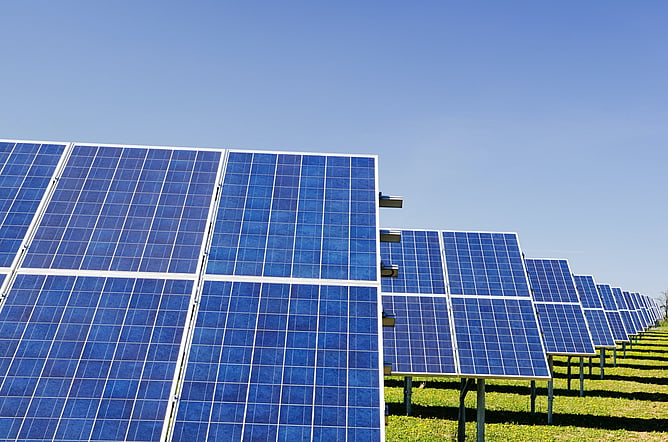
Lodestone builds solar farms. Pathfinder describes it as 98% New Zealand owned, with 3 farms currently generating electricity, in Kaitaia, Edgecumbe and Waiotahe, 2 more under construction, and 5 further sites consented. Pathfinder first invested in mid-2021, and says it has taken part in several funding rounds since.
Lodestone says the panels sit 2 metres above the ground, spaced widely enough that farm machinery can still work underneath and livestock can still graze there. The company says this design keeps up to 80% of the land's original agricultural productivity, while giving stock useful shade.
On Lodestone's account, farming and solar generation happen on the same land, at the same time.
Lodestone says its goal is to supply somewhere between 3% and 5% of New Zealand's electricity within around 5 years. If it gets there, that would take some of the pressure off hydro during dry periods.
Facts about Lodestone Energy above are as described by Pathfinder Asset Management and Lodestone Energy. Moneyworks has not independently verified them.
None of this happened by accident. New Zealand had a difficult reminder of its energy vulnerability in the winter of 2024, when a dry period pushed hydro lakes to record lows just as gas production fell.
A cold snap pushed up demand at the same time. The country turned to imported coal, and wholesale electricity prices reached record highs.
The catch
Private assets cannot be priced by checking a market each day, because there is no market to check.
Someone has to form a judgement about what the company is worth, using in-house analysis, an independent valuer, or both. The Financial Markets Authority's review, published in April 2026, found that valuations done less often, once a year rather than quarterly, carry a real risk of going stale. This creates the most risk for anyone joining or leaving a fund close to the valuation date.
Private assets suit money that can afford to wait.
KiwiSaver is locked in until 65, other than in genuine hardship or a first home purchase, or moving providers. That makes it about as patient a pool of capital as most New Zealanders will ever have.
Patient capital is exactly what a solar farm under construction, or a small business trying to grow, actually needs. It is a poor fit for money you might want back next year.
What this means for you
If you want to know whether any of this applies to your own KiwiSaver, the questions worth asking your provider or adviser are simple ones.
Does the fund hold any private assets, and how much? Who values them, and how often?
Does that answer match how you want your money invested?