Mining is needed, but it makes a mess
September 2026 — publication date to be confirmed
I moderated a panel at the RIAA conference In Septemberå called "Can Mining Be A Responsible Investment?", and my co-panellist was Jessica Cairns from Alphinity Investment Management. We’ve worked with Alphinity for more than 5 years, so I already knew how carefully they think about this, but I still find mining one of the harder calls we make for clients.
Someone on Alphinity’s sustainability committee has a line Jessica quoted on stage, and I haven’t found a better summary since: mining is needed, but it makes a mess.
We ask our clients to tell us how they feel about 6 categorieås we call the nasties: animal testing, fossil fuels, weapons, social harm, environmental damage, human rights violations. They score each one from 1, meaning comfortable, to 3, meaning no exposure at all if possible.
Mining isn’t one of the 6, though maybe it should be. Some clients do ask us about it, usually because a mining company has appeared in their KiwiSaver top 10 and they weren’t expecting it, and Rio Tinto is usually the name.
Rio Tinto holds the majority stake in the Tiwai Point aluminium smelter down in Southland, so most New Zealanders already have an opinion of the company before they even know it’s in their portfolio, and it’s not always a flattering one.
Alphinity manages a fund that invests in companies aligned with the United Nations Sustainable Development Goals, and we use it in our hybrid portfolio. We generally keep it out of our pure ethical portfolio too, though some ethical clients have looked at the mining exposure with us and decided together that they’re comfortable holding it.
Jess’s case for keeping mining in the fund isn’t that mining companies are good. It’s that the economy runs on what they produce: the developing world still needs steel and concrete, and the low carbon transition needs copper, lithium, nickel and cobalt in volumes that aren’t shrinking.
Exclude mining entirely, Jess said, and you exclude around 23% of the Australian sharemarket, which is a serious constraint to place on a fund that’s still competing for ordinary financial returns.
So the real question is which mining companies, not whether mining belongs at all, and Rio Tinto’s own history is a useful example of how that plays out in practice.
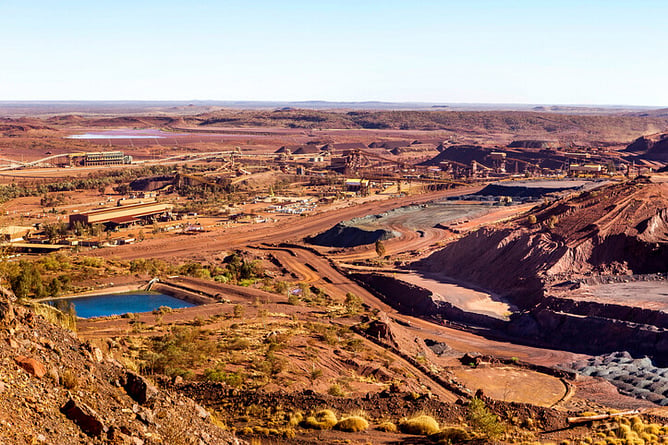
In May 2020, Rio Tinto blew up 2 rock shelters at Juukan Gorge in the Pilbara that had been used continuously for 46,000 years, on a site sacred to the Puutu Kunti Kurrama and Pinikura people. The approval for the blast dated back to 2013, before later surveys showed what was really there, and Rio went ahead anyway despite a late request from the PKKP to stop.
The response was significant: Rio’s chief executive and 2 senior deputies lost their jobs, the board was overhauled, and the wider industry moved to what’s now called a co-management approach, giving traditional owner groups an actual role in mine planning rather than a consultation exercise run around them.
Jessica told the room that Alphinity now meets the PKKP directly, and that the relationship with Rio has improved, though she was clear this hasn’t happened everywhere yet. Other traditional owner groups near Rio’s other Pilbara assets are still working through disputes, including one over water access near one of Rio’s mines, so engagement is making a difference in some places faster than others.
BHP is the other significant holding, and it’s grown since the company split off its fossil fuel assets. Jess told us BHP still runs 1 thermal coal mine, in the Hunter Valley north of Sydney, worth about 3.6% of group revenue, and the company’s committed to closing it by 2030 without lifting production before then.
BHP was also involved with the mine at Samarco, a joint venture with the Brazilian miner Vale. A tailings dam collapse there in 2015 caused loss of life and significant environmental damage, and the compensation and remediation are still working through the courts a decade on, including a class action in the United Kingdom. Jessica said BHP sets out roughly 10 pages on the liability in its own annual report, which is more candour than most companies manage on their worst mistakes.
Jess also said BHP has had to slow the decarbonisation of its truck fleet, deferring around $4 billion of spending from 2029 to roughly 2032, because a haul truck the size of a house can’t yet recharge fast enough to keep a mine running at full productivity. She pushed back on the idea that this counts as backsliding, since BHP disclosed the delay itself, in its own financial report, before any journalist did.
A Western Australian parliamentary inquiry, reporting in 2022, raised serious concerns about how women were treated in fly-in fly-out mining camps, and named Rio Tinto, Fortescue and BHP among the companies it looked at.
What followed has been real progress, even if it’s not finished. Companies limited alcohol on site, tightened rosters, and improved lighting and security in accommodation, and Alphinity did its own benchmarking across the industry afterwards and found some useful examples of better practice. There’s more work to do, but the industry has clearly been paying attention.
I left that session with the same view I arrived with, just better informed. We won’t tell a client mining is clean, because it isn’t, but what we can tell them is which companies are managing a genuinely difficult business more responsibly than others, and why that distinction is worth making rather than excluding the whole sector to make our own job simpler.
If Rio Tinto or BHP is one of your top 10 holdings and you’ve wondered about it, it’s worth raising with us directly.