
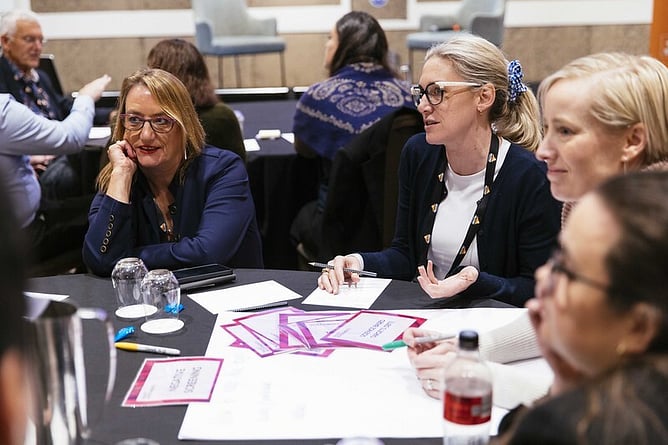
The RIAA conference, run by the Responsible Investment Association of Australasia, is the one event that brings together almost everyone working in responsible and ethical investing in New Zealand.
I have presented most years, sometimes twice in a year. Paul has done it once too.
What the conference has not done well, for a long time, is the sessions built specifically for financial advisers. The RIAA board is made up of people who are not advisers, and the adviser sessions had become something of an afterthought. Largely the same content, rotated from one year to the next.
Registrations reflected that. 57 advisers registered in 2024. That fell to 45 in 2025.
In mid-2025 I raised it with RIAA's leadership. I had ideas about what would actually work, and I said so.
What followed was closer to a year of work than a single conversation. Researching what advisers actually needed. Working out who could deliver it credibly. Testing what the sessions should look like in practice.
What the brief was
The brief for each session was the same: information that adds real value, whether you are new to advising or have been doing it for 20 years. That is a lower bar than it sounds. An adviser is never going to be the expert in every corner of responsible investing.
I have clients who know more than I do about specific issues: human rights abuses in supply chains, environmental damage, weapons and defence exposure. That reflects how wide the subject matter is, not a weakness in the profession. The sessions needed to reflect that, rather than repeat a generic values pitch everyone in the room had already heard.
Alan Papier, John Berry and Kate Vennell opened the day with geopolitics and sovereign risk, turning the kind of instability that dominates headlines into something an adviser can actually use in a client conversation.
Mark Longbottom ran a workshop on jargon busting, aimed at the plain-language problem that drives most client confusion about responsible investing.
Jessica Cairns and I took on a genuinely difficult question: whether mining can be a responsible investment at all, rather than assuming the exclusion list has already settled it.
Katie Beith, Chris Douglas, Jono Broome and I closed the day with the practical end of it: how to actually build a responsible investment portfolio, once the theory is out of the way.
There were 4 sessions, across a single day in Auckland on 22 September 2026, and each of them were built to answer a real question rather than fill a slot.
What happens next
By the day itself, 72 advisers had registered, 20% of everyone at the conference, against 45 in 2025 and 57 the year before that.
We also worked to make the day easier to attend, including support from several KiwiSaver managers who helped cover the cost for advisers who wanted to be there and arranging a reduction in cost to $250 for advisers (from the $775 headline rate).
A survey went out to everyone who attended, asking what worked, what did not, and what the stream should cover next.
The reason this needed fixing is straightforward. Most New Zealanders who invest through KiwiSaver or a portfolio do so through a financial adviser, and a growing number of people want their money invested in a way that reflects what they actually believe.
Advisers are the ones actually in the room with clients, having that conversation. If the profession's own conference cannot give them decent, current information to work with, it is asking advisers to have conversations they are not equipped for.
4 sessions for 2027 are already designed, and conversations with presenters are underway. The survey responses will help me to refine the detail, but they won’t decide the direction.